Part 1 of 3 in the series The Dallas Calibration Calendar: Season-Proofing Your Windshield Before Damage Wins (The Complete Series).
There is a moment every Dallas driver knows. You walk out to your car at 4 p.m. in July, the dash reads 118 degrees, you crank the A/C to max, and you hear it. A soft tick. Then a line crawls across your windshield like a crack in lake ice. That chip you have been ignoring since March just became a replacement.
This series was built with technical insights from Goliath Auto Glass, whose technicians work on glass through Texas heat, hail, and freeze cycles all year long. This first part covers summer, because summer turns small damage into expensive damage faster than any other season.
What Thermal Shock Actually Does to Your Glass
Your windshield is not one sheet of glass. It is two layers bonded around a plastic interlayer. When the sun bakes that sandwich to 150 degrees on a sealed parking lot, the outer layer expands. Blast 55-degree air across the inside surface and the inner layer contracts. The two layers are now pulling in opposite directions, and the only thing holding them together is the bond between them.
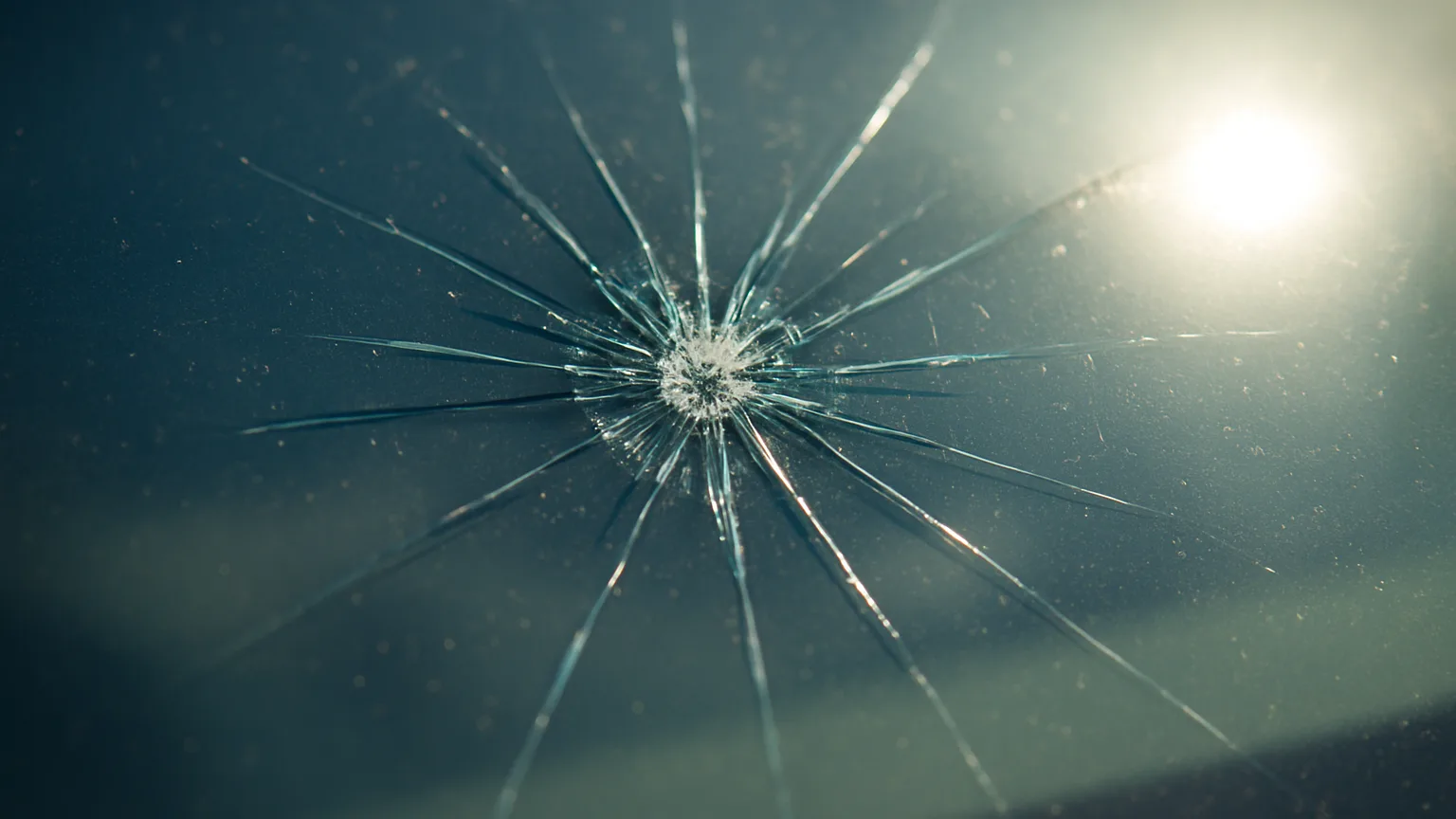
Healthy glass handles that tug of war fine. Glass with a chip does not. A chip is a break in the surface tension, and every stress line running through the windshield now has a place to go. That is why cracks so often appear the moment you start the car, not while you are driving.
The Dallas Conditions That Make It Worse
Not every hot climate is equally hard on glass. North Texas stacks several problems on top of each other:
- Swing, not just heat. A 100-degree afternoon followed by a 74-degree night means daily expansion and contraction cycles.
- Surface parking everywhere. Asphalt radiates heat up into the underside of the glass while the sun hits the top.
- Construction gravel. Ongoing work on 635, 35E, and the Tollway keeps loose rock airborne year round.
- Sudden downpours. Cold rain hitting superheated glass is a shock event on its own.
- Long commutes. More highway miles means more vibration working on an existing chip.
Put those together and a chip that would sit quietly for two years in a milder state can run in a single afternoon here.
Check It Before You Guess
Most chips smaller than a quarter, and most cracks shorter than about six inches, are still repairable. What matters is location, depth, and how long dirt has been packed into the break. A chip directly in the driver's line of sight often gets replaced instead of repaired, because even a good resin fill leaves slight distortion. For a quick at-home read, the quarter test tells you a lot before you ever call anyone.
Time matters more than most people expect. A fresh chip is a clean cavity. A three-month-old chip is full of dust, wiper fluid residue, and road grime, and resin cannot bond well to a dirty break. The repair still works, but clarity and strength both drop.
Why Summer Repairs Need Different Handling
Resin cures with UV light, and Texas has plenty of it. That sounds helpful, but heat works against a quality repair. Glass that is too hot thins the resin and cures it unevenly, and trapped air expands inside the break during injection.
"In the summer we cool the glass down before we touch it, because injecting resin into a windshield sitting at 140 degrees traps air and gives you a weak fill that fails in a month," says Marcus Ellery, lead glass technician at Goliath Auto Glass. That is why a shaded bay or an early morning mobile appointment beats a noon repair in an open lot.
What a Proper Warm-Weather Repair Looks Like
- Glass temperature brought down and stabilized before work begins
- Moisture and debris fully evacuated from the break under vacuum
- Resin matched to ambient conditions, not a single all-season formula
- Controlled UV cure rather than direct sunlight
- Pit polished flush so wipers do not catch and reopen the surface
The Part Most Drivers Forget: Calibration
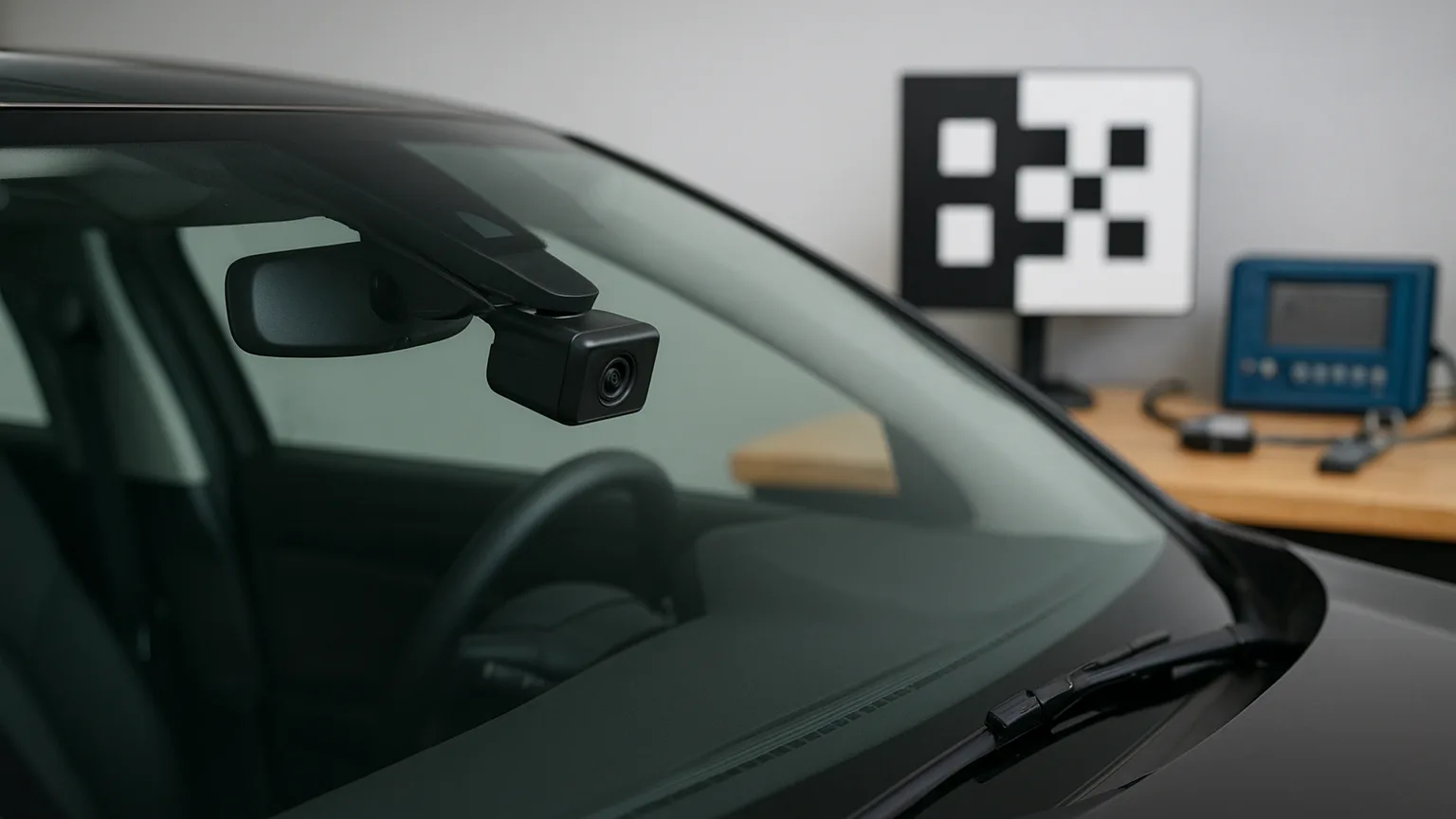
If your vehicle was built in roughly the last eight years, there is a good chance a forward-facing camera sits behind your rearview mirror running lane keep assist, automatic emergency braking, and adaptive cruise. It is aimed through a very specific section of glass.
A resin repair does not usually move that camera. A replacement always does. Removing and reinstalling the glass changes the camera's angle by fractions of a degree, and fractions of a degree at 200 feet down the road become several feet of error, the difference between seeing a lane line and seeing a shoulder.
Heat adds a wrinkle. Urethane adhesive cures differently in extreme temperatures, and a windshield that settles as the adhesive finishes curing can shift sensor aim after you drive away, so calibration should happen after the adhesive reaches safe drive-away strength, not before. Static calibration uses targets set at measured distances indoors; dynamic calibration requires driving at steady speed on clearly marked roads. Many vehicles need both, and dynamic runs are often scheduled for morning here, because heat shimmer off pavement interferes with how the camera reads lane markings. Insurance questions come up constantly at this stage, and it helps to know that Texas never passed the free windshield law many drivers still believe exists.
The Cheapest Fix Is the One You Do Today
A chip repair takes about thirty minutes and costs a fraction of a replacement. Many Texas comprehensive policies waive the deductible on repairs entirely, because insurers would rather pay for resin than glass plus calibration. The only thing that makes this expensive is waiting.
The pattern repeats every year. Winter gravel puts a chip in your windshield. Spring rain packs it with grit. Summer heat and A/C shock pull it into a crack that runs the width of the glass. Each stage costs more than the last, and the jump from repair to replacement is where the bill multiplies.
Inspect your glass this week, get anything smaller than a quarter filled while it is still clean, and if replacement is unavoidable, insist that calibration is completed and documented as part of the job. Part two covers spring storms: how to pre-check and document your calibration status before hail season opens, so post-damage repairs move fast and stay insurance-clean.
Glass problem in your driveway right now?
Send a photo with the year, make and model. You get a straight answer on repair or replacement and a time we can be there.