Texas will let you black out the back of your car like a limousine and still write you up for the two windows beside your head. That is not a loophole or an old rule nobody updated. It is the actual structure of the law, and it catches out roughly every driver who assumes tint is tint and the whole car gets treated the same way.
The rules live in the Texas Transportation Code, they have not changed in years, and they come down to one number, one line on your windshield, and a short list of colors. Once you have those three things straight, picking a film stops being a gamble and starts being a decision.
Twenty five is the number to memorize
For the windows on either side of the driver, Texas requires that at least twenty five percent of visible light passes through. Any darker than that and the window is out of compliance. The measurement is called visible light transmission, usually shortened to VLT, and the way people talk about it trips them up constantly.
A lower number means darker glass. Five percent VLT is the near black film people call limo tint. Seventy percent is barely noticeable. So when a shop says twenty five percent is your limit on the front doors, they mean you cannot go below it, not that you have to hit it exactly. Thirty five percent front doors are legal and very common in Dallas because they cut heat noticeably while leaving margin if a meter reads a point or two low.
Why a meter can disagree with your invoice
Film is manufactured to a rating, but the glass underneath has its own light transmission, and the meter reads the two together. That is why a thirty five percent film applied over glass that already blocks some light can come back under thirty five on a roadside reading. Ordering right at the legal limit leaves you no room for that stacking, which is the single most common way a legal purchase turns into an illegal window.
Window by window, what the state allows
The law treats each opening differently, and the differences are larger than most drivers expect.
- Front side windows. At least twenty five percent light transmission, and no more than twenty five percent reflectance. This is the pair that gets checked.
- Back side windows. The windows behind the driver are exempt from the restriction. You can go as dark as you want back there.
- Rear window. Also exempt, provided the vehicle has functioning outside mirrors on both sides. Since virtually every car does, this is effectively unrestricted.
- Windshield. Tint is allowed only along the top strip, and the combined light transmission still has to reach twenty five percent with reflectance no higher than twenty five percent.
That structure explains the cars you see every day with a nearly opaque back half and clearly lighter front doors. Those owners did not compromise. They followed the statute exactly.
The AS-1 line, and the strip everyone gets wrong
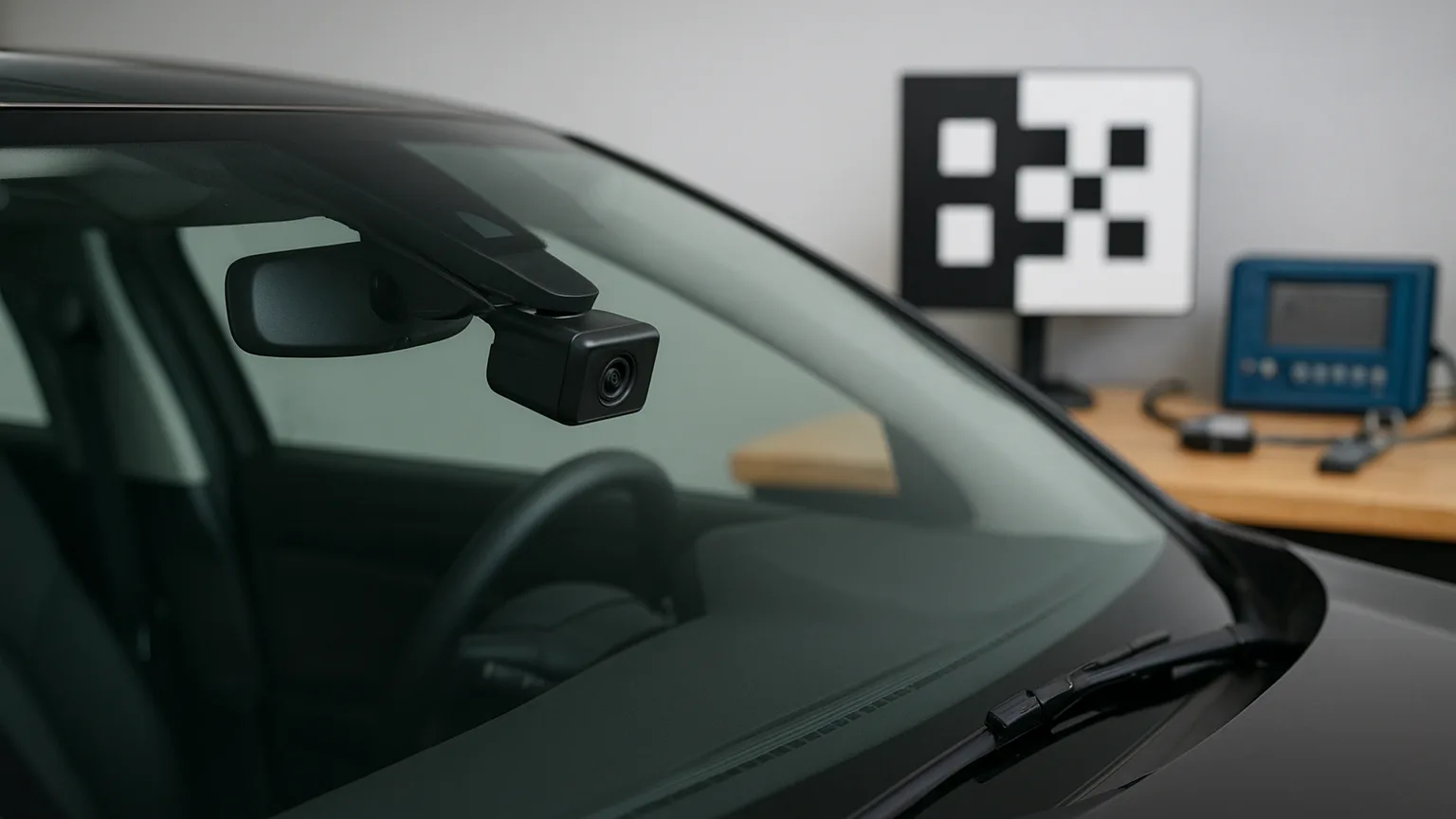
Look at the top corner of your windshield, near where the glass meets the pillar, and you will usually find a small marking that includes the code AS-1. Draw an imaginary horizontal line across the glass at that mark. Texas allows tint above that line. Below it, the windshield stays clear.
Not every windshield carries a visible AS-1 mark, so the law gives a fallback. If you cannot find it, the boundary is five inches down from the top of the windshield, or the AS-1 line, whichever sits closer to the top. In practice that means a shop measuring carefully will keep the strip narrow rather than pushing it. A visor strip is meant to cut glare from a low sun on a straight run down Central Expressway, not to shade your entire field of view.
This is also the detail that gets overlooked after glass work. If your windshield gets replaced, the new glass arrives without your old visor strip, and the AS-1 mark on the replacement may sit slightly differently. Anyone reapplying film should re-measure rather than copy the old line. It comes up often enough that we cover it alongside windshield replacement when a customer had a strip before.
Three colors the state will not accept
Texas prohibits red, blue and amber tint outright. It does not matter how light the film is or which window it goes on. The reasoning is straightforward. Those colors interfere with how other drivers and officers read your brake lights, turn signals and hazards through the glass, and they can distort how colored lights look from inside the car.
Charcoal and neutral grey films are the standard for exactly this reason, and better ceramic products stay neutral rather than shifting purple as they age. That purple fade on older cars is dyed film breaking down, and it is a cosmetic tell that the film is nearing the end of its life.
Factory privacy glass is not the same as film
Many SUVs, trucks and vans leave the factory with the rear glass already darkened. That darkening is in the glass itself, not a film on top of it, and manufacturer tinted glass is treated as original equipment rather than aftermarket tint. It is why a new vehicle can roll off the lot looking far darker in back than anything you could legally add to the front.
What matters for compliance is that film applied over factory privacy glass stacks. The two multiply rather than average. Since the back windows are exempt anyway, this rarely creates a legal problem, but it does create a visibility one. Stacking film on already dark rear glass can leave you backing out of a driveway at night with almost nothing usable in the mirrors. If a back window ever needs replacing, our door and back glass service covers what comes with the new pane and what does not.
Exemptions, and the medical piece
The statute carves out several categories, including law enforcement vehicles, commercial vehicles, and vehicles carrying passengers for hire under local authorization. Rearview mirrors, sun visors and factory tinted glass are treated separately from aftermarket film as well.
Texas also recognizes a medical defense for drivers or passengers who need additional protection from sunlight. It is a defense raised with documentation rather than a sticker that makes a stop disappear, so the practical advice is simple. If a physician has advised extra shielding, carry the paperwork in the vehicle rather than in a drawer at home.
What a tint stop actually looks like
An officer with a handheld meter clips it over the top edge of the window and reads the transmission directly. There is no argument to be had with the number. A violation is a misdemeanor, and the practical outcome varies by court and by whether it is a first occurrence. In many cases the resolution involves removing the offending film and showing proof, which means the real cost is the removal, the replacement film, and an afternoon you did not plan to spend.
Removal is also the part people underestimate. Old film comes off in pieces, adhesive stays behind, and rear windows carry defroster lines that damage easily if someone gets aggressive with a blade. Doing it right takes patience and steam, which is a good reason to get the film choice correct the first time.
Picking film that survives a Dallas summer
Legality is the floor, not the goal. Two windows can both read thirty five percent and perform completely differently in August traffic.
- Dyed film is the least expensive option. It darkens the glass and does relatively little for heat, and it is the type most likely to fade purple over time.
- Metallized film rejects more heat but can interfere with radio, GPS and tire pressure sensor signals on some vehicles.
- Ceramic film costs more and rejects a large share of infrared heat without going dark and without signal interference. In a city where cars sit in open parking lots all summer, it is usually the one worth paying for.
The heat you feel through the glass is mostly infrared, not visible light, which is why a light ceramic film can outperform a much darker cheap one. Choosing by shade alone is how people end up with a dark car that is still unbearable at four in the afternoon.
Shade Without the Traffic Stop
The whole law fits on an index card. Twenty five percent minimum on the front side windows, nothing below the AS-1 line on the windshield, back windows are yours to do as you like, and no red, blue or amber anywhere on the car. Everything else is preference, budget, and how much heat you want to keep out of the cabin on a July afternoon in Dallas.
Where drivers get into trouble is at the edges, ordering right at the limit and losing the margin to the glass underneath, or copying an old visor strip onto a new windshield without re-measuring. Both are avoidable with one careful conversation before the film goes on. If you want the shade without the roadside meter reading, take a look at our window tinting service or get in touch and we will walk through what your specific glass will actually measure once the film is applied.
Glass problem in your driveway right now?
Send a photo with the year, make and model. You get a straight answer on repair or replacement and a time we can be there.